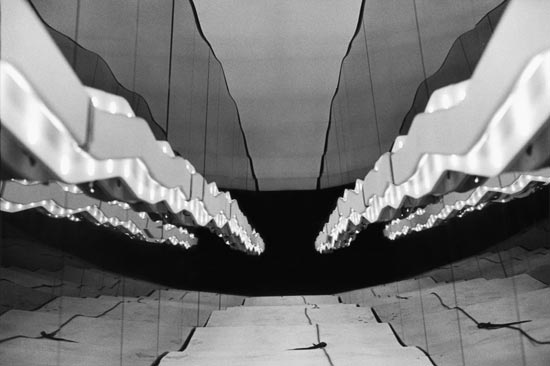
Research the two examples; 'Tender'(2003-05) and 'Leaf Litter'(1999-2003) to explain how they relate to this concept.
1. First define mercantilism, using material from your ALVC handbook, and explain how it has developed since the Renaissance.
Mercantilism:
According to The Columbia Encyclopedia, Sixth Edition. (2005) Mercantilism.;
Between the major trading nations during the 16th, 17th and 18th centuries, mercantilism was the system used to gain great wealth. In Holland, France, England and the rest of Western Europe, it massively improved on the medieval feudal organization. Because of the universal demand for precious metals, such as gold, in return for other commodities, many states increased their export trades. This wealth was used to fuel civil governments and the maintenance of armies to fight the many religious and commercial wars going on at the time. "Under a mercantilist policy a nation sought to sell more than it bought so as to accumulate bullion. This trade ruled the economy through corporations and trading companies.Production was carefully regulated with the object of securing goods of high quality and low cost. Treaties were made to obtain exclusive trading privileges".
According to Barnard, M. (1998). Art Design and Visual Culture;
"By the end of the high Renaissance mercantilist policies were giving way to a new economic system, capitalism. People such as Adam Smith (1723 - 1790) were extremely critical of the mercantilist system. They called for the end of government regulation and suggested that economic growth could only truly happen if markets were free and governments didn't interfere with trade."
http://longstreet.typepad.com/thesciencebookstore/2009/05/index.html
2. Identify the ideas or concepts in Hall's work that relate to Mercantilism?
Fiona Hall's works illustrate the concepts of mercantilism that are showing through in todays word. She does this through the materials with which she produces her works. This also influences the shape and form of her works. Hall uses modern day concepts of mercantilism behind her work, she picks on large corporations and the way in which they are taking advantage of poorer countries to further advance their wealth. Huge companies that are going through globalization, make sure to buy their production materials cheap and export them for a higher price and in massive quantities. Hall also addresses a further range of contemporary issues such as colonialism, consumerism and natural history.
Largely concentrating on our human relationship with the earth, Hall incorporates natural and organic elements into her work to emphasize the damage of our ways and the reduction of the planet as it falls victim to our greed and necessity for wealth. An interesting point to be seen here is the connection between the natural world and mercantilism. In order to establish stable trade resources, powerful nations have colonized smaller ones to take full advantage of what that nation has to offer.
For example, the first Europeans that came to New Zealand in the 1600's. They brought with them cheap items from their homelands that could be easily traded for the local natural resources and goods that the natives had to offer. Over time this was taken for granted and many of New Zealand's natural resources have been depleted because of the way that colonizers have taken advantage.
3. For each work describe the shape, form and materials used, and also explain the ideas behind each example.
'Tender':
'Tender', by Fiona Hall, is a series of bird's nests woven from thousands of torn up american dollar bills. This is a depiction of the natural world and our vision of 'value'.
"In Tender 2006, Hall explores the complex intersections between the natural world and human systems of trade. This refined, meditative installation consists of thousands of shredded US dollar bills painstakingly woven into 183 bird nests, each for a different species and its own particular habitat. The face value of these notes is deliberately destroyed in order to restore their use value — not as nests but as art. Hall poses two questions here: what happens when one's native habitat is invaded and eroded, and what happens when the almighty US dollar becomes the world's only accepted currency. Both the nests and their places of origin are greatly diverse."
'Leaf Litter':
In each of the works in 'Leaf Litter', Hall takes bank notes from the country of the leaf's origin and uses them as a canvas on which to paint the leaf. This leaf is the fishtail palm and is native to Sri Lanka. The notes that Hall has used is the Sri Lankan Rupee. The leaf itself is painted with gouache. This is a representation of how natural habitats are being destroyed and native species are being endagered for the sake of wealth and globalisation. Natural resources are being hugely depleted to expand trade and create more money. The use of the leaf also represents the fact that leaves and trees themselves are used to create the physical bank notes.
“Money doesn’t grow on trees–or does it? Plants have played a crucial role in the history of colonisation and the development of world economies. Many species have been responsible for the rapid growth of European power and wealth over the past five hundred years. Plants, and along with them people, have been shifted across oceans, battles have been waged over them, forests razed. But everything comes at a price, and now we are paying heavily for over-taxing the environment and for cultivating an ever-widening gap between rich and poor nations. Many of the once most plant resource-rich countries are now amongst the poorest on earth. Leaf Litter aligns the distribution of plant species with the distribution of monetary wealth.”
4. In your opinion do the materials communicate the ideas of the work? Please explain your answer.
Yes, I think that the materials communicate the ideas of her works very well. I think this because the direct correlation between the materials Hall uses and the ideas behind the works are made clear. There are no hidden meanings within her works, the message is loud and clear. This in itself is a testament to her ideas. The materials she uses holds the 'perpetrators' directly responsible by putting their stamp, or their money, all over her works. Hall plasters her works with labels, pointing the finger at those who are encouraging and feeding globalization, capitalism and colonization. For example, the use of the American dollar in 'Tender'; America is one of the largest countries in the world and must have some of the largest paper consumption. In order to get this paper, massive swathes of native forest must be cut down to feed this huge appetite.
5. Fiona Hall's recent project The Kermadecs focuses on issues around the Pacific ocean. Research this project to summarize the importance of the area and upload an image to your blog for discussion.
http://vimeo.com/kermadec/fionahall
The Kermadec trench is an area in the Pacific ocean, north of New Zealand. There has recently been much corporate interest in the trench as it is rich in gold and marine life. Fiona Hall has also taken an interest because of the current suspense held around the subject. She has taken a trip along the trench and has much enjoyed the wildlife. In her video she describes the issue as 'hanging in limbo', no decisions have been made either way as to whether or not the trench should be mined or major commercial fishing stations should be set up.
'Bowline on a Bight'
An extract from Fiona Hall's voyage over the Kermadec Trench;
"Sea level. Only, level it wasn’t. The sea of our journey along the Kermadec Trench was wind-blown and wave-flecked and shifty. As unsteady on my feet, on the Otago, as was the sea beneath, I took some advice from the ship’s bridge and stared ahead to the horizon. At the outset the expanse of ocean and sky and the rolling of the ship had a nauseating, yet mesmeric effect. It didn’t take long to register that looking out to sea was not only the most obvious pastime on board, it was the intoxicant of our voyage. Sunsets and rises were main events; each dawn on the bridge I caught the last light of the morning star as it faded out over the water, and watched the Southern Cross flying on the ensign shoot its red stars high into the breeze above. And red again at night: as dusk fell about our ship it switched its incandescent lighting to an infra-red twilight. It continued its passage through the night; our dimmed grey hulk was a shadow-ship crossing the inky sea. During daylight hours, I watched from the bridge as small and sometimes bigger waves pitched into our prow, causing us to slope into a trough and then set to rights again.
Somewhere I found my sea legs. Another occupation I discovered was to lie headlong on the lower deck at the stern, looking down over the edge into our wake which spewed out behind the engine. The white line slicing through the water was ruler-straight, precisely drawn by our ship-shape ship on the unruly ocean. Steady as she goes.
I imagined that the line of our wake on the surface of the sea might, from below, look like a scratch in the thick glass-green bottom of a bottle. It was an image in reverse, and made me reflect that our lives are lived in a world composed largely of water, in which we are all passengers sailing on the model ship marooned inside the bottle, tossed about in the sea of our dreams and wild imaginings. In my mind I drew a vertical line from our ship to the bottom of the Kermadec Trench below, down to a crack in the molten eggshell of the Earth’s core. The line drew deeper than the lowest limits where daylight could possibly reach, and slipped in the darkness from the firm grasp of science. And then the line I drew sank from my mind’s view, beyond the farthest, darkest fathom that I could ever reach by my imagining. Ten thousand metres from the sea floor to its surface.
Falling up. On the ship, on the bathymetric Trench map I saw the long gape of the Kermadec’s jaw and its set of volcano teeth, each identified by name; the ‘Rumbles’ at the Southern end I thought of as a band of renegades in a generally mutinous dynasty. The way to the Trench’s surface is, inescapably through its subterranean mouth-minefield. The whole place smokes like a chimney: its sulphurous breath pours out through hydrothermic vents. It constantly blows its stack. And habitually it gets the shakes, having an unstable geomorphic disposition. At the top of the Trench swim the top predators of the deep; whales and sharks. And now, although nowhere (as yet) visible to the eye, other subversive life (or death) forms are circling in the water: fishing and mining interests. The ocean is not quiet; new hunts are on, greedy for a kill. New breeds of corporate pirates have their spyglasses trained on the Kermadec treasure chest below. To them, it looks like a submerged bank vault: the volcano teeth have gold fillings. Lying in the sunlight on the deck on the surface of the sea, I shut my eyes to picture the volcanoes. Blood flows. Behind my eyelids I saw red.
Rock the boat.
“To remark carefully the Ebbings and Flowings of the Seas, in as many places as they can, together with all the Accidents, Ordinary and Extraordinary, of the Tides. To sound and marke the Depths of Coasts and Ports, and such other places near the shoar, as they shall think fit. To take notice of the Nature of the Ground at the bottom of the Sea in all Soundings, whether it be Clay, Sand, Rock, &c. To observe and record all Extraordinary Meteors, Lightnings, Thunders, Ignes fatui, Comets, &c.”
—Laurence Rooken, Directions for Sea-men, Bound for Far Voyages (1666)
“Season after season, the annual migration of whales from the ice-cold seas of the Antarctic to breed in the waters of the tropics brought the great creatures around the Kermadecs. Schools of humpback whales showed up off Denham Bay and the northern shores of Sunday Island every season. With uncouth bellowing, rumblings, whistlings and snorting, they cavorted and gambolled day and night, flinging their unwieldy bodies about like a school of delirious dolphins. Many a night they kept the Bells awake with their nerve-wracking din, startling them from sleep with their thunderous tail whackings as they broached and sounded and flung themselves about in the waves.”
—Elsie K. Morton, Crusoes of Sunday Island"