1. Chalayan’s works in clothing, like Afterwords (2000) and Burka (1996) , are often challenging to both the viewer and the wearer. What are your personal responses to these works? Are Afterwords and Burka fashion, or are they art? What is the difference?


The first response I had to 'Burka' was shock. I highly doubted that that could be fashion. To have so much meaning and emotion expressed in a series of outfits (if the last one could even be called that), how could it remain as fashion? I am aware that fashion is not always made to be presentable or 'wearable' in society but is made to make a specific kind of statement. This is obvious in 'Afterwords' however. And this work I would classify as high fashion.
"Fashion is a general term for a popular style or practice, especially in clothing, footwear, accessories, makeup, or furniture. "Fashion" refers to a distinctive; however, often-habitual trend in a look and dress up of a person, as well as to prevailing styles in behavior. "Fashion" usually is the newest creations made by designers and are bought by only a few number of people; however, often those "fashions" are translated into more established trends. [1] The more technical term, "costume," has become so linked in the public eye with the term "fashion" that the more general term "costume" has in popular use mostly been relegated to special senses like fancy dress or masquerade wear, while the term "fashion" means clothing generally, and the study of it. For a broad cross-cultural look at clothing and its place in society, refer to the entries for clothing, costume, and fabrics. The remainder of this article deals with clothing fashions in the Western world."
- http://en.wikipedia.org/wiki/Fashion
2. Chalayan has strong links to industry. Pieces like The Level Tunnel (2006) and Repose(2006) are made in collaboration with, and paid for by, commercial business; in these cases, a vodka company and a crystal manufacturer. How does this impact on the nature of Chalayan’s work? Does the meaning of art change when it is used to sell products? Is it still art?
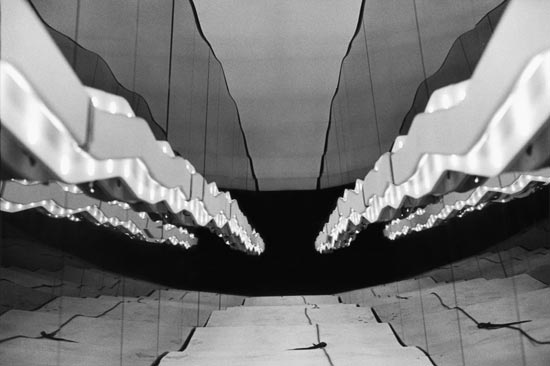
The Level Tunnel (2006)
When work is done in collaboration I always find that it limits the artists ability to completely express themselves and make the work entirely their own. When there are specifications or requests to fulfill the artist is immediately restricted. Yes, though these works are advertising, they are still works of art. They involve the view and create an experience, the still express the artist and have Chalayan's touch.

No comments:
Post a Comment